Is Studying English in Malta Worth It?

English language students are diverse — young professionals and expats of all ages
In short: English Schools in Malta
Is it worth it?
Compared to the UK or US: Yes, it is much cheaper and the weather is better.
Reality check:
In summer (July/August) popular areas like St. Julian's are party zones, not study zones. Classes are often packed to the limit. Accommodation prices skyrocket.
Tip: Don't just look at the school brand, look at the location. If you want to focus, choose a school in Sliema or Gzira, not in the middle of Paceville.
The Mediterranean climate, beautiful beaches and the fact that English is one of the official languages make Malta a popular destination to study English.
My blog should help you understand living expenses, cost of accommodation and the pricing of English language schools on the island.
Why choose Malta to study English?
Official language
English is widely spoken in Malta, making it an ideal place to practice. Many elderly people, however, will still prefer Maltese for their conversations. But in all commercial areas from St. Julian’s to Valletta, you will find your way in English.
Fantastic weather
With over 300 sunny days per year, students can enjoy a combination of studying and exploring with their classmates. Many students have classes from 9am to 1pm and spend time at the waterfront or the beaches in the afternoon.
Affordability
Studying in Malta is cheaper than in the UK, Ireland or the US. If you stay long-term (i.e. at least 6 months), your rent for a room in a shared flat may be around €550-600 (updated with 2026 prices) in areas where most schools are located, such as St. Julian’s, Sliema and Gzira. Accomodation cost can be significantly higher though if you stay for less than six months. Read: Malta Workation on a Budget
Restaurants aren’t cheap in these areas, so if you are on a tight budget, it’s better to prepare meals at home. Eating out (budget meal) will cost you around €12-15 per meal. A cappuccino in the commercial areas is between €2.50 and €2.80.
Groceries are more expensive than in continental Europe as Malta imports most of its food. Expect to spend around €250 per month on groceries (updated with 2026 prices) if you shop at Lidl.
Public transport is free if you register with Transport Malta and get your Tallinja card. Uber and Bolt rides are significantly cheaper than in continental Europe, but costs will add up over time and public transport should be your preferred option. Read: No Car in Malta? How we Get Around
Electricity (including heating and air conditioning) and water for a 3-bedroom flat is usually between €70-100 per month (split among flatmates). Gas (for cooking) is €17 per bottle and lasts for at least three months. For internet you should assume €30 per month.
Surprisingly, gym memberships are quite expensive, especially if you register for only a month or two. You should expect around €50 for membership at a gym in the commercial areas.
International student community
The student community is diverse. French and Germans make up a large part of the European students. International students are from Brazil, Colombia, Turkey and many other countries. Most schools offer socialising events and ensure that you connect to other students and locals. Many schools incentivise their students to visit events organised by English Cafe.
Work opportunities
Non-EU students (e.g. from South America, Turkey or Asia) studying for longer than 90 days can apply for a work permit, allowing them to work up to 20 hours per week while studying. The switch from a student visa to a work-only visa has been made more difficult recently. Work visas can only be applied for at the embassy in the applicant’s home country unfortunately. Malta’s job market is booming, however, you may struggle to find a job that matches your career as the island’s job market is limited in size.
Cost of studying
The cost of studying English in Malta varies based on several factors:
The school you choose
The type of course (general, intensive, Business English)
The time of year (high season is June-September)
The number of weeks you study (longer courses often offer lower weekly rates)
Additional fees (registration, books, visa costs)
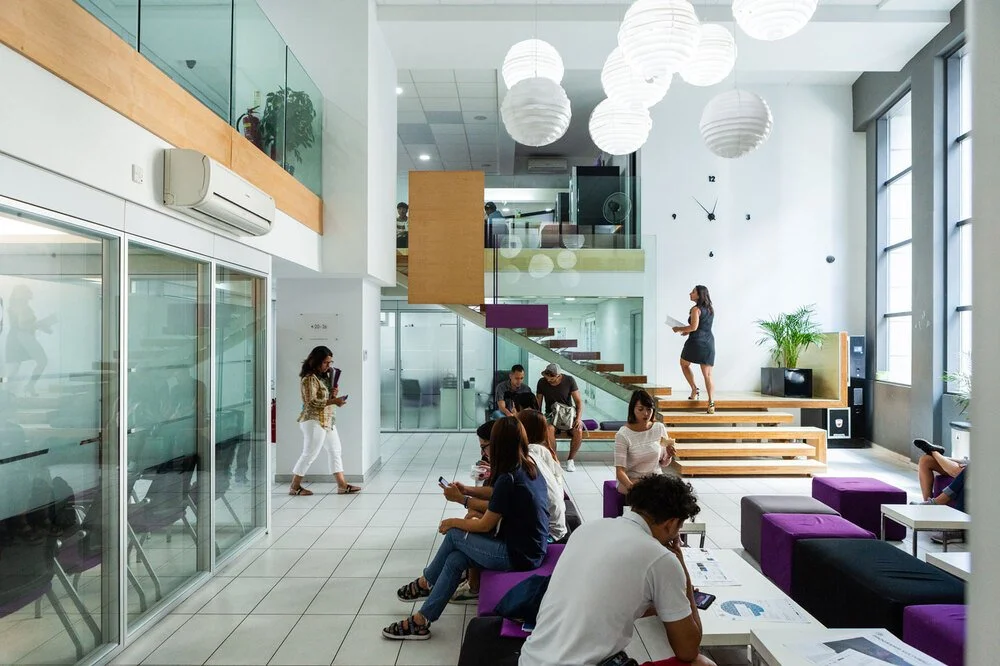
Lobby at ACE English Malta
Prices for a 4-week course
To make prices comparable for you, these are the price quotations of Malta’s English language schools for a 4-week course with 20 classes, i.e. 15 hours per week.
Note that study material is not included in these prices. If you stay longer you with a school, these prices tend to decrease. Some schools have a high and low season price, see below bands.
Prices are as of 31/12/2025, based on the schools’ updated 2026 price lists:
| School & Location | Price (4 Weeks) |
|---|---|
|
Gateway San Gwann (Quiet Area) |
€620 |
|
International House Swieqi (Near St. Julian's) |
€720 – €980 |
|
Inlingua Sliema (Shopping Area) |
€800 (+ High Season fees) |
|
ACE English Malta St. Julian's (Bay Street) |
€920 – €1,140 |
|
AM Language Sliema (Side Street) |
€1,040 |
|
EC Language Centres St. Julian's (Paceville) |
€1,067 – €1,149 |
|
IELS Sliema (Ferries) |
€1,080 |
|
English Path St. Julian's |
€1,180 |
*Prices based on 20 lessons/week (General English). Ranges indicate Low vs. High Season pricing.
